A film about a 1997 clock: Claude, the NSA curve seeds and quantum circuits
Blog post #107
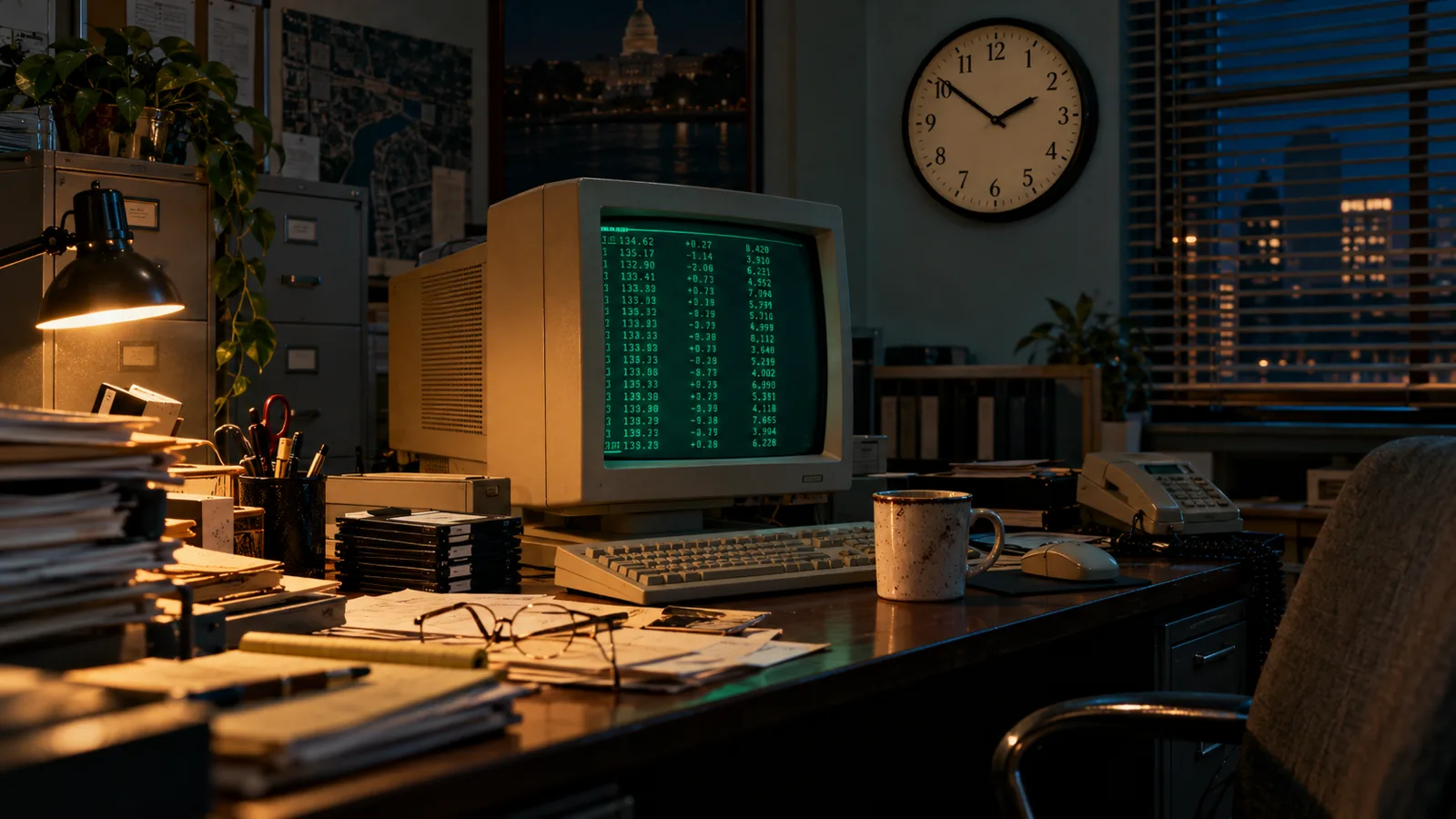
AI-generated illustration.
On October 16, Anthropic published two research posts on the same day. In one, Claude worked out where the NIST elliptic curve seeds came from, a question people have argued about since the NSA handed them over in 1997. In the other, Claude Mythos 5 designed quantum circuits that beat published designs. I asked for research on whether it was worth a film, said “build it so I can see what I think”, and it went live on the channel the next day.
🎥 Prefer video? Watch the film on YouTube.
What shipped
- A 9:48 film, “Claude Solved a 29-Year-Old NSA Mystery in Half an Hour”, on Superintelligence, Explored, with chapters, sources, image credits and 31 tags (quantum computing, post-quantum cryptography, P-256, secp256k1 and so on).
- The story in two halves. First the mystery: the seed for P-256 is not a hash of a funny sentence like “Jerry deserves a raise”, as the NSA mathematician who handed it over remembered. It is output from
lrand48, the ordinary random number generator in 1990s C libraries, started from the computer’s clock. Run the generator backwards and you land on 1997-08-16 01:52:34 UTC. Then the future: the quantum circuits, and what the “17 times fewer gates” headline actually means. - Three Shorts, one a day at 15:30 Swedish time from October 21: the 1997 clock, the seed that was never a sentence, and the quantum circuits.
The headline was wrong, and that made the film better
- The text I started from was a news summary that an AI had written for me in the morning. It said Claude made breaking elliptic-curve cryptography 17 times cheaper. When we read the paper (arXiv 2610.22367), the 17x turned out to compare against one specific design, the one that uses the fewest qubits. Another published design already uses fewer gates than Claude’s, with more qubits. Claude’s design fills the gap in the middle of the trade-off, and it covers one part of the attack, not the whole thing.
- So the film has a short scene that says it plainly: this does not make breaking Bitcoin 17 times cheaper. Anthropic’s own post does not mention Bitcoin, and several of the eight tasks are about chemistry and physics.
- The seed story turned out to be the stronger film anyway: a 29-year-old mystery, a prize that nobody could claim because there was no sentence to find, and an exact second.
How the day went
- Research first. An HTML page with the verdict on top: yes, but lead with the seeds. Both Anthropic posts, Filippo Valsorda’s write-up, Steve Weis’s notes and the arXiv tables, with the numbers checked against each other.
- Script, then Codex. About 1,600 words. Codex fact-checked it against the sources before any voice was recorded and found real problems: the zero-bit clue was in four of ten seeds (the binary curves), not in P-256; “a billion possibilities” only holds under Valsorda’s assumptions; the NSA’s 2015 message was narrower than I wrote; and “cleared the curves” was stronger than the evidence. All fixed.
- I ran Anthropic’s code. Their post includes 30 lines of Python (CC0) that rebuild the seeds from the timestamps. I ran it and all five NIST seeds matched the standard. That terminal output is in the film as real material.
- Voice, images, build. ElevenLabs
eleven_v4with my voice clone, checked with Parakeet transcription; two scenes were re-recorded because words had dropped. Twelve images from Codex (a 1997 office at night, a robot detective with a magnifying glass, a hard drive next to the Ark of the Covenant), Commons photos, Anthropic’s own figures and screenshots of the source pages. Four agents built the 14 scenes in HyperFrames in parallel, in about half an hour. - One version. I watched v1 and liked it, so it went out as it was, with no second round.
Decisions made
- My face on the thumbnail. Every other channel puts a person on the thumbnail. So I am running YouTube’s Test & Compare: the series style (lavender, big title, image tile) against a version with my own photo in front of the 1997 office. YouTube estimates about 13 days before it picks a winner on watch time.
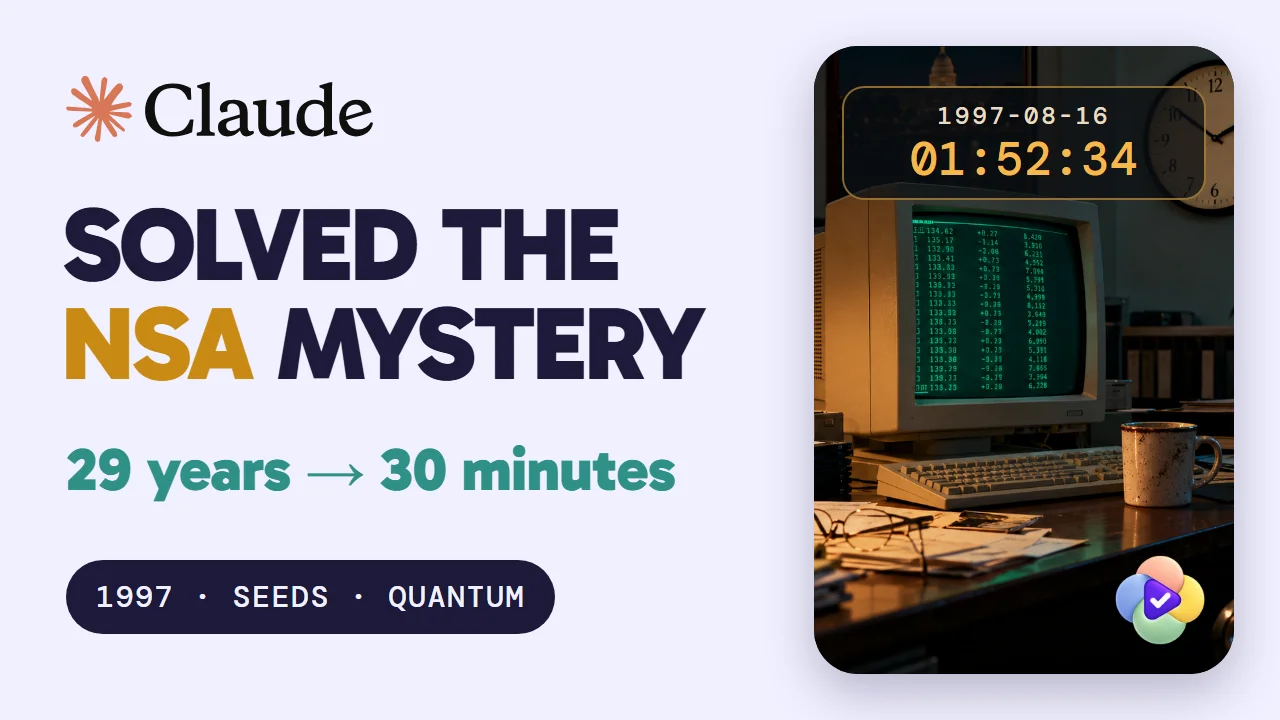
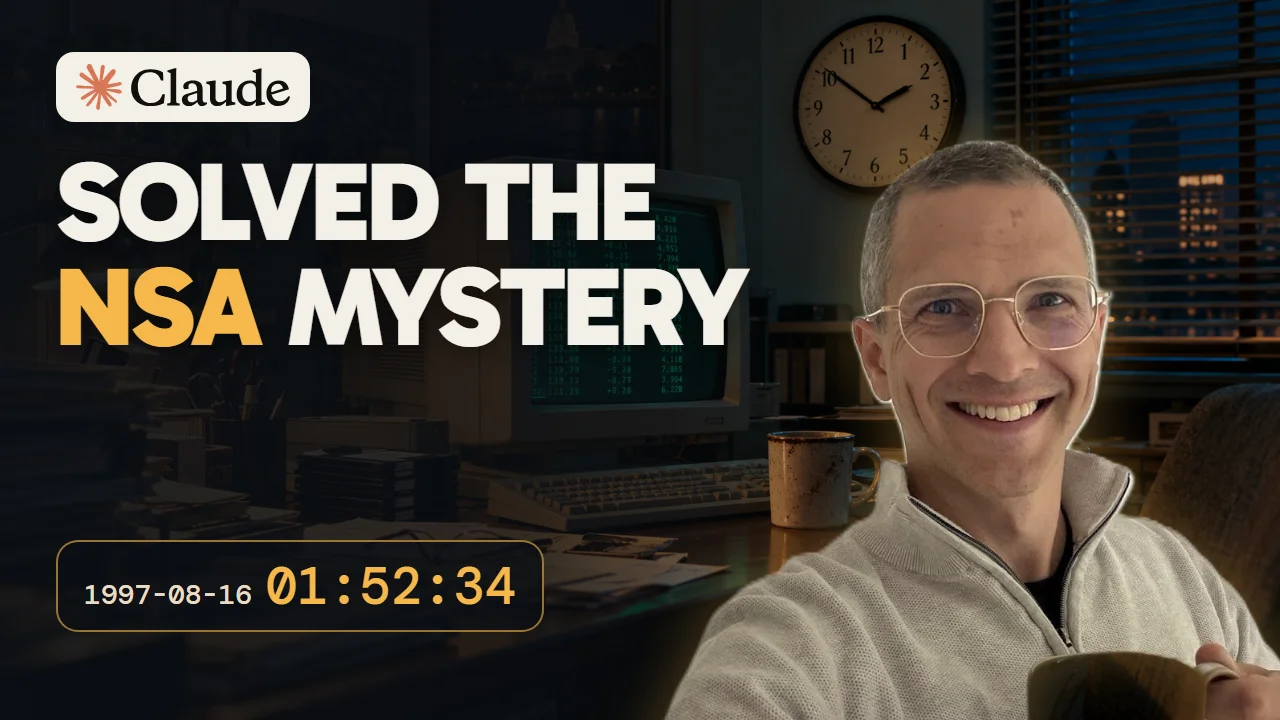
- No Bitcoin drama. No coins cracking, no Bitcoin logos breaking. The quantum part shows the three designs side by side and says what is and is not new.
What’s unclear or broken
- No Swedish audio track this time, and no end screen yet.
Tooling & process
- HyperFrames for the film and the Shorts, with a harness that checks every scene before the render.
- ElevenLabs
eleven_v4with my voice clone, Parakeet to check the narration word by word. - Codex for images and fact checking, the YouTube Data API for upload and scheduling, and Claude in Chrome for the A/B test in YouTube Studio.
— Stefan